
Post
How to Arrange Decorative & Throw Pillows Like an Interior Designer
Jun
How to Arrange Decorative & Throw Pillows Like an Interior Designer
Introduction How to Arrange Decorative & Throw Pillows Like
Decorative and throw pillows are one of the easiest and most affordable ways to refresh a living room, bedroom, or reading nook without replacing furniture. Whether you’re styling a modern apartment, a cozy farmhouse, or a luxurious hotel-inspired bedroom, the right pillow arrangement can instantly elevate your space by adding color, texture, depth, and personality.
Professional interior designers don’t simply pile pillows onto a sofa—they carefully balance size, shape, color, pattern, and texture to create a polished yet inviting look. The good news is that you don’t need a design degree to achieve the same effect.
In this comprehensive guide, you’ll learn the essential principles of styling decorative and throw pillows like an interior designer, along with practical layout ideas for sofas, beds, chairs, and sectionals.
Find more home styling inspiration from one of the leading interior design resources:
Houzz – Living Room Design Ideas
Why Throw Pillows Matter


Throw pillows do much more than provide comfort. They help:
- Add color without repainting walls
- Introduce texture and visual interest
- Balance large furniture pieces
- Tie together different décor elements
- Create seasonal updates with minimal effort
- Make a room feel warmer and more inviting
A thoughtfully arranged collection of pillows can completely transform the look of a space.
Start with the Right Pillow Sizes
Professional designers typically layer pillows from largest to smallest.
Common decorative pillow sizes include:
| Pillow Size | Best Use |
|---|---|
| 26 × 26 in | Large beds |
| 24 × 24 in | Deep sofas |
| 22 × 22 in | Standard sofa styling |
| 20 × 20 in | Accent pillows |
| 18 × 18 in | Layering |
| Lumbar | Lower back support and visual contrast |
Using multiple sizes creates depth and avoids a flat appearance.
Follow the Rule of Layers


Interior designers often arrange pillows in three layers:
Back Layer
Use the largest pillows to create a foundation.
Middle Layer
Add medium-sized pillows featuring complementary colors or patterns.
Front Layer
Finish with a smaller square or lumbar pillow as the focal point.
This layered approach gives arrangements a balanced and professionally styled look.
Mix Colors Thoughtfully
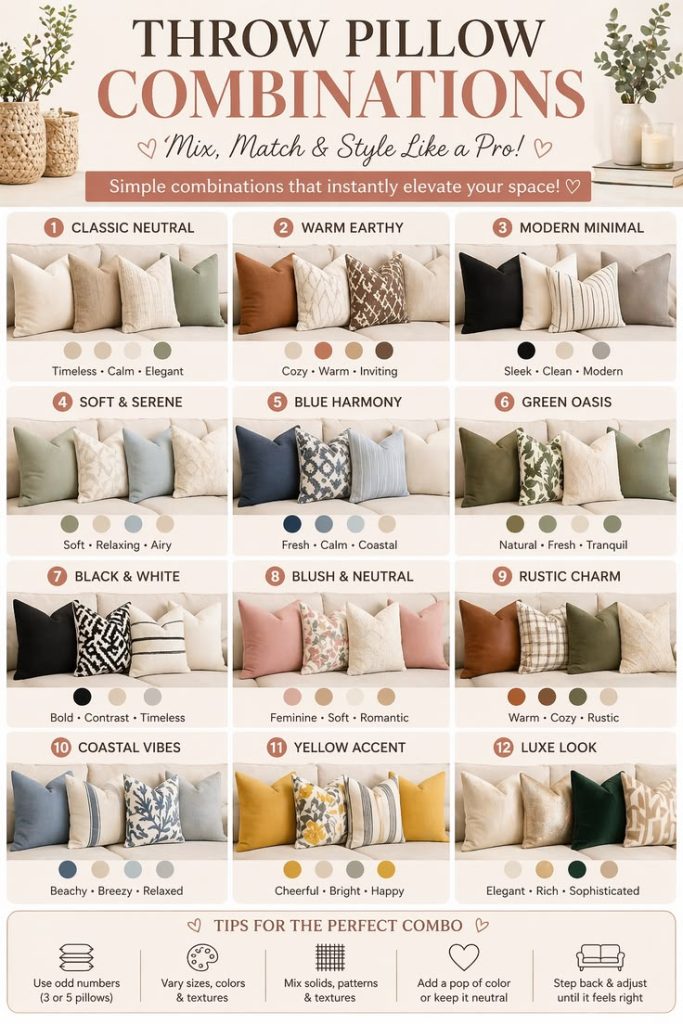
Choose a cohesive color palette rather than matching every pillow exactly.
A simple guideline is:
- 60% dominant color
- 30% secondary color
- 10% accent color
For example:
- Beige
- Soft gray
- Navy blue
Or:
- White
- Olive green
- Mustard yellow
Repeating colors found elsewhere in the room—such as rugs, artwork, or curtains—helps create a unified design.
Combine Different Textures
Texture adds dimension, especially in neutral spaces.
Popular materials include:
- Linen
- Velvet
- Cotton
- Faux fur
- Bouclé
- Knit fabrics
- Leather accents
Mixing textures creates a richer, more inviting appearance even when using similar colors.
Mix Patterns the Right Way


Designers often combine three types of patterns:
- Large-scale pattern
- Small-scale pattern
- Solid fabric
For example:
- Floral print
- Thin stripes
- Solid velvet
Keeping a consistent color palette prevents the arrangement from looking busy.
Styling Different Furniture
Sofa
For a standard three-seat sofa:
- Two large pillows in the corners
- Two medium pillows
- One lumbar pillow in the center
This classic 2-2-1 arrangement offers symmetry with a comfortable feel.
Sectional
Sectionals benefit from asymmetrical styling.
Use:
- Three pillows on one side
- Two on the other
- One accent lumbar pillow
This keeps the arrangement visually balanced without looking overly formal.
Bed
For a queen or king bed, layer pillows in this order:
- Sleeping pillows
- Euro pillows
- Decorative square pillows
- Lumbar pillow
This creates the plush, hotel-inspired look often seen in luxury bedrooms.
Accent Chair
Limit the arrangement to one or two pillows to avoid overwhelming the chair while still adding comfort and style.
Seasonal Styling Ideas
One of the easiest ways to refresh a room is by changing pillow covers throughout the year.
Spring
- Pastel colors
- Floral prints
- Linen fabrics
Summer
- White
- Light blue
- Coastal textures
Autumn
- Rust
- Olive
- Burnt orange
- Chunky knits
Winter
- Velvet
- Faux fur
- Deep green
- Burgundy
- Cream
Swapping covers instead of buying new inserts is a cost-effective way to update your décor.
Common Decorating Mistakes
Avoid these common issues:
- Using pillows that are all the same size
- Matching every color exactly
- Overcrowding the sofa
- Ignoring texture
- Choosing pillows that are too small for large furniture
- Prioritizing appearance over comfort
A balanced arrangement should be both attractive and practical.
Designer Tips
Professional interior designers often recommend:
- Using feather or down-alternative inserts that are slightly larger than the pillow cover for a fuller appearance.
- Combining odd numbers of pillows (such as three or five) for a relaxed, modern aesthetic.
- Leaving enough seating space so pillows enhance comfort rather than getting in the way.
- Refreshing your look with new covers instead of replacing entire pillows.
Buying Checklist
Before purchasing decorative pillows, make sure they:
✔ Complement your room’s color palette
✔ Include a mix of textures and patterns
✔ Vary in size for layered styling
✔ Have removable, washable covers
✔ Use quality inserts that maintain their shape
✔ Fit the scale of your furniture
Conclusion
Decorative and throw pillows are one of the simplest ways to elevate the style and comfort of any room. By layering different sizes, mixing complementary colors, combining textures, and balancing patterns, you can create arrangements that look polished yet welcoming. Whether you’re styling a sofa, sectional, bed, or accent chair, thoughtful pillow placement helps tie together your décor while adding personality and warmth.
The key is to strike a balance between aesthetics and functionality. Choose pillows that enhance your existing color scheme, suit the scale of your furniture, and remain comfortable for everyday use. With a few well-chosen pieces and an understanding of basic design principles, you can achieve an interior designer-inspired look that is both timeless and inviting.
