
Post
The Science Behind Memory Foam Pillows: How They Support Your Spine
Jun
The Science Behind Memory Foam Pillows: How They Support Your Spine
Introduction
A good night’s sleep depends on more than just a comfortable mattress. Your pillow plays a critical role in maintaining proper spinal alignment, supporting your neck, and reducing pressure points throughout the night. Among the many pillow options available today, memory foam pillows have become one of the most popular choices for people seeking better sleep quality and improved neck support.
Originally developed by NASA researchers in the 1960s to improve cushioning and impact protection, memory foam has since evolved into a widely used material in mattresses, pillows, and ergonomic sleep products. Modern memory foam pillows are engineered to contour to the unique shape of your head and neck, helping promote a more neutral sleeping posture.
In this guide, we’ll explore the science behind memory foam, how it supports your spine, its benefits and limitations, and how to choose the right pillow for your sleeping position.
Learn more about memory foam technology from a trusted sleep resource:
Sleep Foundation – Memory Foam Pillows Guide
What Is Memory Foam?


Memory foam is a type of viscoelastic polyurethane foam. It combines two important properties:
- Viscosity, which allows the material to slowly respond to pressure.
- Elasticity, which enables it to return to its original shape after the pressure is removed.
When you lie on a memory foam pillow, your body heat and weight soften the foam, allowing it to contour around your head and neck. Once you get up, the foam gradually regains its original shape.
Why Spinal Alignment Matters
Your spine naturally has gentle curves in the:
- Neck (cervical spine)
- Upper back (thoracic spine)
- Lower back (lumbar spine)
A pillow should help maintain these natural curves rather than forcing your neck into an awkward position.
Poor spinal alignment during sleep may contribute to:
- Neck stiffness
- Shoulder discomfort
- Muscle tension
- Morning headaches
- Interrupted sleep
A supportive pillow helps keep your head, neck, and upper spine in a more neutral position throughout the night.
How Memory Foam Supports Your Spine


1. Even Pressure Distribution
Unlike traditional fiber-filled pillows, memory foam distributes pressure over a larger surface area.
This can help reduce concentrated pressure on:
- Neck muscles
- Shoulders
- Head
The result is improved comfort and less localized strain.
2. Contouring Support
Memory foam molds to the shape of your head and neck, helping fill the natural gap between your neck and the mattress.
This customized support may help maintain a neutral cervical spine, particularly for side and back sleepers.
3. Reduced Motion
Memory foam absorbs movement rather than bouncing back immediately.
This stable support can reduce the need for frequent pillow adjustments during the night.
4. Consistent Loft
Many traditional pillows gradually flatten over time.
High-quality memory foam typically retains its shape longer, providing more consistent support night after night.
Benefits of Memory Foam Pillows
Excellent Neck Support
The contouring properties help keep the neck supported in a comfortable position.
Better Pressure Relief


By evenly distributing weight, memory foam can reduce pressure on sensitive areas.
This may be particularly beneficial for:
- Side sleepers
- People with shoulder discomfort
- Those who prefer a stable sleeping surface
Improved Sleep Quality
Better support and fewer pressure points may reduce nighttime tossing and turning for some sleepers, leading to more restful sleep.
Long-Lasting Shape
Compared with many polyester-filled pillows, memory foam generally maintains its structure for a longer period when properly cared for.
Hypoallergenic Options
Many memory foam pillows are naturally resistant to dust mites and are available with hypoallergenic covers, making them a practical option for many households.
Potential Drawbacks
Memory foam isn’t the best choice for everyone.
Some considerations include:
Heat Retention
Traditional memory foam may trap heat.
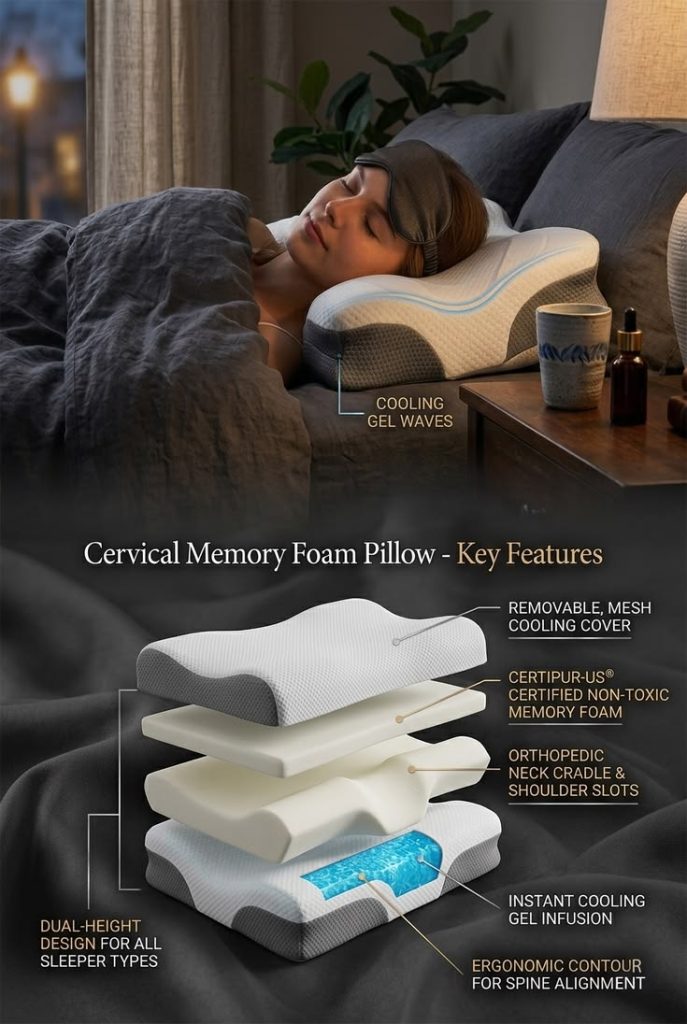
Many modern pillows address this with:
- Gel-infused foam
- Open-cell foam
- Ventilation channels
- Breathable covers
Initial Odor
New memory foam products sometimes have a temporary manufacturing odor, commonly called “off-gassing.”
This odor typically diminishes after airing out the pillow in a well-ventilated space for a few days.
Weight
Memory foam pillows are often heavier than fiber-filled alternatives, which may make them less convenient for people who frequently reposition their pillow.
Choosing the Right Memory Foam Pillow
Different sleeping positions benefit from different pillow heights (loft).
Side Sleepers
Choose:
- Higher loft
- Medium-firm to firm support
This helps fill the space between the shoulder and the head.
Back Sleepers
A medium-loft pillow usually provides balanced support for maintaining the natural curve of the neck.
Stomach Sleepers
A low-loft memory foam pillow—or in some cases, no pillow—may reduce excessive neck extension. Stomach sleeping, however, is generally less favorable for spinal alignment than side or back sleeping.
Solid vs. Shredded Memory Foam
| Feature | Solid Memory Foam | Shredded Memory Foam |
|---|---|---|
| Support | Excellent | Excellent |
| Adjustability | Limited | High |
| Airflow | Moderate | Better |
| Shape Retention | Excellent | Very Good |
| Customizable Loft | No | Yes |
Shredded memory foam pillows often allow users to add or remove fill to customize height and firmness.
Caring for Your Memory Foam Pillow
To maximize its lifespan:
- Use a removable pillow protector.
- Wash only the cover unless the manufacturer states the foam itself is washable.
- Air out the pillow periodically.
- Avoid prolonged exposure to direct sunlight.
- Replace the pillow when it no longer provides adequate support.
Many quality memory foam pillows last 3–5 years, depending on the foam density, usage, and care.
Buying Checklist
Before purchasing a memory foam pillow, make sure it:
✔ Matches your sleeping position
✔ Provides appropriate loft and firmness
✔ Includes breathable or cooling features if you sleep hot
✔ Uses high-quality, certified foam
✔ Has a removable, washable cover
✔ Comes with a warranty or trial period if available
Conclusion
Memory foam pillows combine innovative viscoelastic technology with ergonomic design to provide personalized support for the head, neck, and upper spine. By contouring to your unique shape, distributing pressure evenly, and maintaining consistent loft over time, they can help promote better spinal alignment and improve overall sleep comfort. These characteristics make them especially popular among side and back sleepers, as well as individuals seeking enhanced neck support.
While memory foam may not be the ideal choice for everyone—particularly those who dislike its slower response or are sensitive to heat—modern cooling technologies and adjustable designs have addressed many of these concerns. By selecting a pillow that matches your sleeping position, comfort preferences, and support needs, you can make an informed investment in healthier, more restorative sleep.
